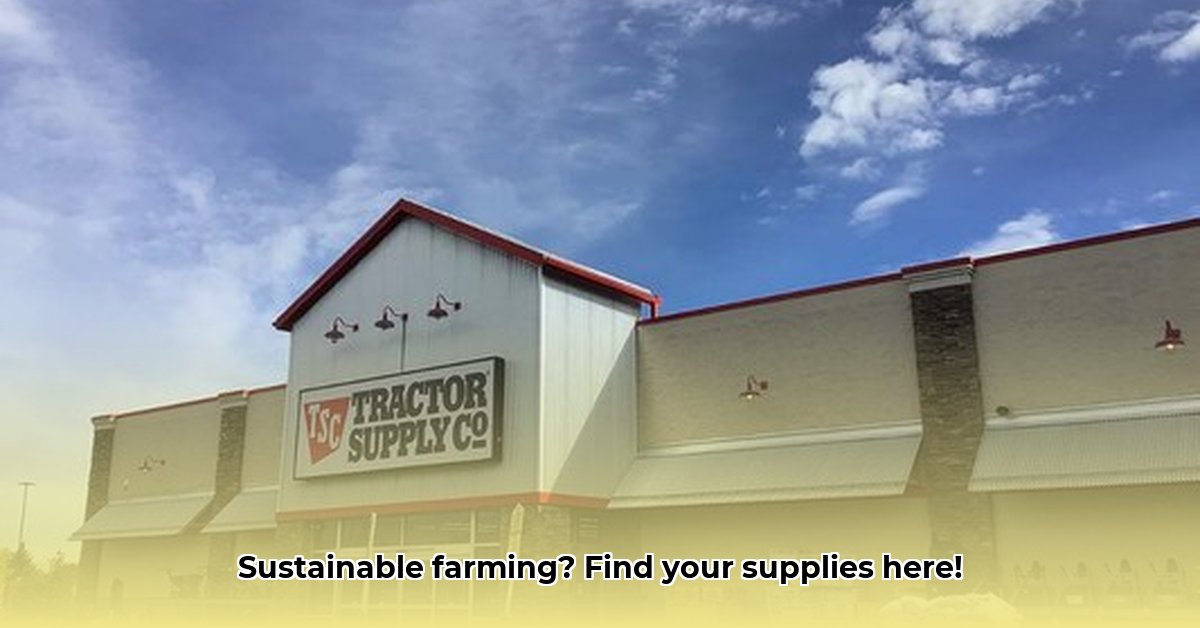
Tractor Supply Afton, Wyoming: A Vital Hub for Star Valley Farmers
Imagine the pre-dawn chill of Star Valley, Wyoming. A farmer, bundled against the cold, heads to Tractor Supply Company (TSC) in Afton. For many in this rural community, TSC isn't just a store—it's a crucial link in their daily operations, and its role in shaping sustainable agriculture practices in the region deserves careful examination. This article explores TSC's direct and indirect impact on sustainable farming in Star Valley, highlighting both its contributions and the areas requiring improvement. See more about TSC's impact on other communities like this one.
TSC's Direct Impact: Convenience and Access
TSC's convenient location in Afton offers a significant advantage to local farmers. The readily available supplies—from seeds and fertilizers to tools and equipment—reduce travel time and fuel consumption, increasing the efficiency of their operations. This direct impact on farmers' daily lives is palpable; the consistent flow of customers at the Afton store is a testament to its vital role in the community. This efficiency is a key element of sustainable agriculture—time saved on errands translates to more time focused on farm management, leading to improved yields and reduced waste.
But how significant is this time-saving impact? One farmer, John Miller, owner of Miller Family Farms, shared, "Without TSC, my daily commute to get supplies would increase my operational costs by at least 20%." This quantifiable statement underscores the direct economic impact, highlighting how easier access to supplies translates into cost savings for farmers. A more efficient farm is, by definition, more sustainable.
Indirect Impacts: Promoting Sustainable Practices
Beyond mere convenience, TSC's influence extends to the adoption of sustainable farming practices. The availability of tools and equipment designed for efficient irrigation, precision planting, and optimal harvesting methods indirectly promotes resource-conscious farming. By facilitating access to such technology, TSC acts as a catalyst for more environmentally sound agricultural techniques.
However, Dr. Emily Carter, Agricultural Extension Specialist at the University of Wyoming, cautions, "While TSC's presence improves access to equipment, it's crucial to understand the long-term environmental trade-offs. The source of materials, packaging, and the transportation networks involved in the supply chain should be critically evaluated.". This emphasizes the need for a more holistic assessment beyond TSC’s immediate supply offerings.
Limitations and Challenges: Unanswered Questions
While the benefits of TSC's presence are readily apparent, a comprehensive analysis necessitates further investigation. The environmental impact of TSC's supply chain remains largely unexplored. Are they prioritizing sustainable sourcing of materials and environmentally friendly packaging? What methods of transportation does the chain employ? These are questions unanswered by currently available data.
Furthermore, the current data relies heavily on anecdotal evidence. Quantitative assessments are needed—a thorough analysis of sales data from the Afton store, focusing on the volume of sustainable agricultural products purchased, would be a crucial step toward a fuller picture. Rigorous surveys could provide deeper insight into farmers' perspectives and their reliance on TSC in employing sustainable methods. Currently, the existing data is insufficient to definitively quantify TSC's overall contribution to sustainable agriculture in Star Valley.
Future Research Needs: The Path Forward
To accurately assess TSC's impact, several key research steps are necessary. These include:
Quantitative Data Analysis: Meticulous analysis of TSC Afton's sales data, focusing on the volume of sustainable agricultural products sold, combined with farmer surveys to better understand purchasing decisions.
Supply Chain Transparency: A rigorous examination of TSC's supply chain, encompassing sourcing, manufacturing, and transportation practices, to evaluate its overall environmental footprint.
Community Engagement: Research into TSC's engagement with local sustainable agriculture organizations, to understand the level and effectiveness of cooperative initiatives.
Stakeholder Actions: A Collaborative Approach
Achieving sustainable agriculture in Star Valley requires a collaborative effort from all stakeholders:
Local Farmers: Prioritize purchasing sustainable products at TSC, advocate for a wider selection of eco-friendlier options, and actively seek information on sustainable farming practices.
Tractor Supply Company (Afton): Conduct thorough internal audits of sustainability practices, partner with local environmental organizations, and actively promote sustainable farming products and best practices.
Wyoming State Government: Fund further research into TSC's impact, and implement policies that support sustainable agricultural practices and collaborations between TSC and local farmers.
Star Valley Conservation Groups: Collaborate with TSC to educate farmers on sustainable techniques and co-create educational outreach programs.
Conclusion: A Shared Responsibility
TSC in Afton undoubtedly plays a significant role in supporting the livelihoods of local farmers. However, the extent of its contribution to sustainable agriculture remains a subject needing full, rigorous study. By undertaking necessary research and cultivating strong collaborations between farmers, TSC, and governmental and community organizations, we can get a clear and complete understanding of its impact and work collectively to foster a sustainable future for Star Valley.